


The tourism industry in Africa has been severely hit by coronavirus lockdowns and cancelled bookings. In a sudden turn of events, almost all hotel bookings were cancelled, wildlife safari excursions were postponed and cultural tours abandoned as the Corona virus spread across the world and devastated the tourism industry worldwide. Many African countries rely on toursim earnings to run their economies. And the hard hit dealt to their tourism industry due to the coronavirus pandemic has had a deeply negative impact of several African economies. The year 2020 started on a positive note for Africa's tourism sector and was shaping up to be a lucrative year. Africa had the world's second fastest growing tourism industry and was expected to bring in billions of dollars. But as the deadly COVID-19 struck, tourists stopped coming and the tourism industry came to a grinding halt. Many African countries are now drawing up new plans to revive their ailing tourism industry. Zimbabwe Tourism Authority’s Acting Chief Executive, Givemore Chidzidzi outlined strategic issues essential in post-Covid-19 tourism recovery drive. Presenting the Destination Zimbabwe Tourism Recovery Draft Plan, he said: “The plan outlines measures to be undertaken by the Government, the tourism industry and stakeholders to address the negative effects of the COVID-19 on the tourism sector. The decline in international arrivals in Africa was less than 10% whereas overseas markets had a decline of more than 10% with Asia and Europe both experiencing a 20% decline. Middle East however had an increase of 20%,” he said. Chidzidzi said domestic tourism currently contributes 30% to the total tourism receipts. He, however, singled out domestic tourism as a key component in post-COVID-19 tourism recovery efforts. The Tourism Recovery Plan drafted by the Zimbabwe Government seeks to among other things: Provide relief packages to affected tourism businesses including small business within the tourism value chain. Provide a soft landing for the tourism industry as they re-open their enterprises to the market. Save and secure jobs from being lost in the tourism value chain. Re-establish contact with the local, regional and international tourism market. Reassure confidence in the marketplace and encourage visitors to travel to and within Zimbabwe thereby boosting tourist arrivals and tourism revenue. Rollout campaigns informing the marketplace that Zimbabwe’s tourism business is back. Zimbabwe Plans Tourism Recovery Against this backdrop, UNWTO has recommended measures for tourism recovery post COVID-19 pandemic which include: Financial and political support for recovery measures targeting the tourism sector in the most affected countries Recovery measures and incentives to be planned and implemented in coordination with international development and donor organizations Tourism support to be included in the wider recovery plans and actions of affected economies. As in the past, UNWTO will provide guidance and support for recovery measures of its members, the private and public tourism sector, including organizers of tourism events and fairs. To reassure the world source markets of their safety in various destinations. To reassure the world source markets that tourism destinations will welcome them back. The UNWTO estimates that in 2020 global international tourist arrivals could decline between 20 - 30%. Zimbabwe international tourist arrivals could decline between 30 - 80%. According to UNWTO, the decline is estimated to lead to loss of between US$30 - 50 billion in spending by international visitors (international tourism receipts) globally. Zimbabwe forecasts a decline which may lead to the loss of between US$ 0.5 – 1.1 billion in tourism receipts.

Kenya’s tourism is bouncing back after years of the slowdown in the country’s incoming tourist arrivals. The United States remained Kenya’s leading market, growing by nine percent with 245,437 arrivals. Kenya’s tourism earnings grew by 3.9 percent to $1.6 billion. Total of 2,048,834 foreign visitors visited Kenya in 2019 compared to 2,025,206 international arrivals in 2018. Domestic Tourism As you must have noticed, most tourism advertisements are targeted at foreigners, yet several African countries are experiencing a strong increase in domestic tourism – specially countries like Rwanda, Kenya, Mozambique, Tanzania, Ivory Coast and Rwanda. With over 1.1 billion Africans expected to be middle class by 2050. African governments are getting serious about promoting domestic tourism. Reducing local flight taxes and promoting new new tourist destinations among local and regional tourists can yield rich dividends for Africa’s tourism earnings. In the East Africa region, Uganda and Tanzania continue to be major source markets for Kenya’s tourism sector. According to recent figures, Kenya received 245,437 tourists from America in 2019, the highest from one country, while Uganda and Tanzania were second and third with 223,010 and 193,740 respectively. Arrivals into Kenya from neighbouring Uganda are expected to increase further this year following the introduction of Uganda Airline’s direct flight from Entebbe to Jomo Kenyatta International Airport (JKIA) in Nairobi and Moi International Airport (MIA) in Mombasa. Mombasa doubles as a business and holiday destination for Uganda and the new air link will boost both business and tourism between Uganda and Kenya. On the other hand, Qatar Airways also started direct flights from Doha to Mombasa in December 2018. Ethiopian Airlines also increased the number of flights to Mombasa from one to two daily in 2019 boosting arrivals through MIA. In 2018, Travel & Tourism grew 5.6% to contribute KSHS 790 billion and 1.1 million jobs to the Kenyan economy. This rate of growth is faster than the global average of 3.9% and the Sub-Saharan Africa average of 3.3%. This makes Kenya the third largest tourism economy in Sub-Saharan Africa after South Africa and Nigeria both of which grew substantially less than Kenya the last couple of years. Surprisingly, Africa’s tourism industry is now the second fastest growing in the world. In Ethiopia, for example, relaxing visa restrictions while improving flight connectivity has seen Addis transformed into a regional transport hub, even overtaking Dubai as the world’s gateway to Africa. This has resulted in Ethiopia becoming Africa’s fastest growing travel country, growing by 48.6% in 2018, according to recent reports. A report compiled by Jumia states that: Africa’s travel and tourism remains one of the key growth drivers of the continent’s economy, contributing 8.5% (or $194.2bn) of the GDP in 2018; from 8.1% and 7.8% in 2017 and 2016 respectively. This growth record placed Africa as the second-fastest growing tourism region in the world, with a growth rate of 5.6% in 2018 after Asia Pacific and against a 3.9% global average growth rate. In 2018, the African continent received 67 million international tourist arrivals (+7% increase), as compared to 63 million in 2017 and 58 million in 2016. Africa received only 5% share of international arrivals in 2017. Morocco and South Africa were the top tourism destinations, with approximately 11 and 10 million arrivals per annum respectively. Ethiopia’s visa relaxation policies combined with improved connectivity as a regional transport hub placed the country as Africa’s fastest growing travel country, growing by 48.6% in 2018 to be worth $7.4bn. The travel and tourism sector directly and indirectly provided employment for about 24.3 million people in 2018, accounting for approximately (6.7%) of total employment. Leisure remains an important component of Africa’s tourism industry, taking up a majority 71% of the tourist expenditure in 2018. Moreover, more governments among them Kenya Rwanda, and South Africa are seen to be driving initiatives towards diversifying business tourism products through MICE (meetings, incentives, conferences and exhibitions). However, business expenditure remained at a staggering 29% in 2018 from 30% in 2017. In 2019, there was less hotel pipeline activity with 75,155 rooms in 401 hotels; as compared to 2018 which had a pipeline activity of 76,322 rooms in 418 hotels. Sub Saharan Africa recorded the highest pipeline with 45,861 rooms in 276 hotels, while North Africa had 29,294 rooms in 125 hotels. The decline in the total Hotel Chain Development Pipelines in Africa has been largely attributed to chains deleting deals that were unlikely to happen and “cleaning” their pipeline from the previous year. In terms of room revenue, it is expected that in the next five years, Nigeria will be the fastest-growing market with a projected 12% compound annual increase. It will be followed by Tanzania and Kenya, with a projection of 8.2% and 7.4% compound annual increases respectively. While Africa’s passenger traffic increased from 88.5 million in 2017 to 92 million in 2018 (+5.5%), it’s world share was only 2.1% (down from 2.2% in 2017). This was attributed to high competition from other regions such as the Asia Pacific. Africa’s share is however predicted to grow by 4.9% annually over the next 20 years. Investment Opportunities Due to its stable business environment and steady economic growth, Kenya’s hospitality industry is definitely set for greater heights. Major goals have been achieved: the improvement of infrastructure, as well as the simplification of permit acquisition for foreigners keen on investing in the hospitality sector.
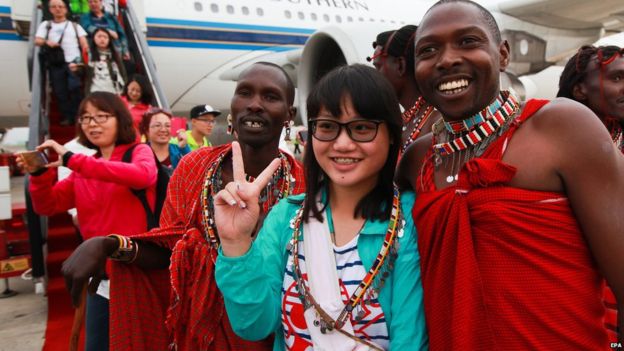
Africa is fast emerging as a hot tourist destination for travellers from across the world as air connectivity and new road networks improve accessibility to the continent's remote natural tourist spots and attract visitors from all across the globe. Clearly, improved air and ground connectivity has resulted in an increase in the number of travellers visiting the African continent for leisure and tourism. A record 67 million tourists visited Africa in 2018, up from 58 million in 2016, the African continent is ranked as the second fastest growing region for tourists. According to a recent report by World Tourism Organisation, the number of tourist arrivals in Africa will more than double to 134 million by 2030. As the number of airlines flying into Africa continues to grow, Africa is sure to attract a growing number of both leisure and business visitors in the coming years. As a result, new hotels are coming up in all parts of Africa in anticipation to accommodate these visitors. Not surprising then that many multinational hotel chains are beginning to recognise the huge potential and investment opportunities opening up in Africa, specially in the tourism and hotel sectors. The Radisson Hotel Group, for example, has signed 11 new hotel deals in Africa during the first nine months of 2019, increasing its African real estate to almost 100 properties. According to industry experts, the Radisson Hotel Group is expected to reach more than 130 hotels and 23,000 rooms in Africa by 2022. Investment Opportunities in Africa Looking at the immense opportunities opening up in Africa's hotel sector, a new trend is emerging where multinational hotel chains are buying and rebranding existing hotels or acquiring smaller hotel groups in Africa. Marriott International, for example, acquired Protea Hotels in 2014 to expand their network in the African continent. However, the growth and expansion of the hotel industry in Africa is not balanced across the continent – developed, fast-growing and stable cities in Africa are outperforming less prominent locations. Consider this: almost 30% of hotel chains in Africa are in South Africa, predominantly in Cape Town and Johannesburg, with over half of African capital cities having fewer than five chain hotels each. Even Airbnb is reporting increased numbers in Africa. The popular accommodation online marketplace has over 130,000 listings in Africa and more that 3.5 million people have used the platform to book accommodation in Africa over the past five years. The majority of foreign visitors to Africa were holiday-makers with 71% of tourist spending across the continent spent on leisure activities. Africa’s tourism industry grew at a rate of 5.6% in 2018, second only to Asia Pacific. This compares to a global growth rate of 3.9% annually. Travel and tourism emerged as an important contributor to the African economy in 2018, accounting to 8.1% of GDP and contributing $194.2 billion to the continent’s economy. Around 67 million tourists flocked to Africa in 2018, a record 7% increase from 63 million arrivals in 2017 and 58 million in 2016. More relaxed visa rules in Ethiopia coupled with improved transport infrastructure gave the country's tourist industry a staggering 48.6% boost in 2018, raking in a total of $7.4 billion. The top African tourist spots were Morocco and South Africa, with around 10 and 11 million arrivals per year. Visa Rules Many African governments have also relaxed their visa formalities in order to attract more tourists. Initiatives such as the creation of the East Africa Visa programme which allows visitors to apply for a single visa online before visiting Uganda, Rwanda and Kenya are making these places evermore attractive to tourists. Zimbabwe, for instance, has also simplified its visa rules to facilitate its tourism sector. "We have simplified the visa processing mechanism and offer visa on arrival for most nationalities," says Givemore Chidzidzi, Zimbabwe Tourism Authority Acting Chief Executive during an interview with Holiday Guide magazine. "China has emerged as an important source market for Zimbabwe and we are keen to attract more tourists from China in the coming years," he said. With more 142 million travellers, China is the world’s biggest outbound market and is growing faster than most traditional source markets. The market is characterised by high spenders and Zimbabwe is pulling out all the stops to attract a larger share of this market. in 2018, China was moved from category C to category B (visa at port of entry) of the current visa regulations in a bid to ease travel from China to Zimbabwe. "The 35% growth in Chinese tourist arrivals to Zimbabwe is a reflection of the market's potential," said Givemore Chidzidzi. Attracting Investments African governments are also wooing international entrepreneurs to invest in their country's booming tourism and hotel sectors. In The Gambia, the government is offering investors free land if developers build hotels in designed areas, and gives investors a 10-year tax holiday if they invest above a $250,000 threshold.
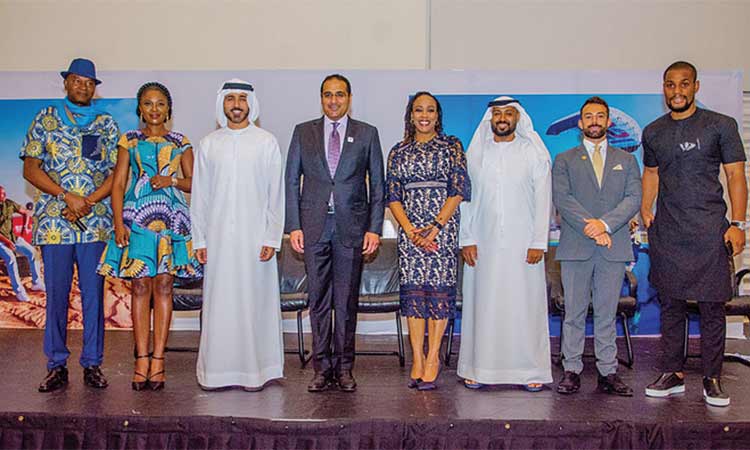
With impressive double digit growth, inbound traffic from Nigeria to Dubai grew by 28 percent year-on-year, cementing its position as the emirate’s 17th largest source market. Dubai’s Department of Tourism and Commerce Marketing (Dubai Tourism) has reported a steady increase in the number of visitors from Nigeria, Africa’s largest source market for inbound traffic to Dubai, welcoming 113,000 overnight visitors in the first seven months of 2019. Dubai’s diverse business, entertainment and leisure attractions have been attracting a growing number of Nigerians. Ongoing promotions by Emirates Airline, Dubai Tourism and other government bodies hav also played a significant role in promoting Dubai's status as a popular destination amongst Nigerian visitors. Nigeria: Dubai's Partner in West Africa Building on ongoing efforts to provide a platform to broadcast Dubai’s multifaceted comprehensive offerings to African tourists, Dubai Tourism, led by the CEO, Issam Kazim, showcased its support at the Akwaaba African Travel Market for the fourth consecutive year with a strong delegation of 21 Dubai-based partners, which included a team from Expo 2020 Dubai. West Africa’s most prestigious travel trade event brought together industry stakeholders from across the public and private sector to provide a platform to share key market insights, further cementing the emirate’s relationships with operators and offering the opportunity to promote Dubai’s ever-evolving destination offering to a highly targeted audience. Winning the ‘Best Stand’ award for the fourth year in a row, the Dubai Tourism stand, which was the largest at the show, welcomed visitors and set an Akwaaba record with over 700 delegates attending its industry panel session. Nollywood Celebrities Promote Dubai To the delight of the crowd, six of the nine Nollywood celebrities from the “Dubai Faceoff” campaign made a surprise appearance on stage to voice their experience and admiration for the city. During the session, Issam Kazim, CEO, Dubai Corporation for Tourism and Commerce Marketing (DCTCM) was joined by Fahad Obaid Mohamed Al Taffag, Ambassador of the United Arab Emirates to Nigeria to provide market insights and an update on visitor figures. Other highlights included Dubai’s diverse destination offerings and an overview of in-market campaigns. Further fostering growth across the African continent, Dubai Tourism continues to leverage its multi-layered marketing strategy, delivering specialised communications programming that recognises the power of social media in influencing travellers’ decision-making processes. This approach saw the launch of the ‘Dubai Face Off’ campaign, where Dubai Tourism successfully collaborated with trade partners WONTRA and Tour Brokers International to provide an exclusive travel package that let fans travel with Nollywood celebrities. As part of the campaign, nine well-known Nigerian celebrities gave fans the rare opportunity to accompany them to Dubai, with the package offering flight tickets, entry visa, airport transfers, four nights stay at a 4 or 5 star accommodation, a desert safari experience, city tour, tickets to IMG World’s of Adventure, world class dining experiences, as well as designated time with the celebrities. The event also encompassed several strategic meetings with trade and media partners, including TBI, a key trade partner and one of the largest in Nigeria; Megaletrics, one of the largest owners of radio stations in Nigeria, as well as Dubai’s other key trade partners GHI Assets, NANTA, Seki, and Wakanow.com. As Dubai Tourism continues to represent itself as a model case study for tourism to the African travel market, it maintains its focus on increasing overall marketing activities including training workshops, trade activities (sales activations, fam trips) and campaigns as well as expanding upon the number of Dubai-based partners that participate in roadshows and events in the Nigerian market. “The immense hospitality and genuine welcome we received during our time in Nigeria paved the way for a hugely successful Akwaaba Travel Market 2019," said Issam Kazim, CEO, Dubai Corporation for Tourism and Commerce Marketing (DCTCM). "Our continued presence at industry events such as these is testament to our globally diversified market strategy to engage with key strategic partners, cementing our positive relationship with the African travel trade ecosystem.” As the department continues to build on and cement its strong relationship with the Nigerian market, Dubai Tourism has plans to launch a second targeted winter marketing celebrity campaign with out-of-home advertising, radio, and social media activations to further engage Nigerian tourists and position Dubai as the destination of choice. Dubai Targets Visitors from Nigeria With strategic support from stakeholders across the city, the celebrity figures and their fans participated in a series of challenges that incorporated social media engagement, asking fans to vote on their favourite winners throughout their stay. The campaign surpassed projected results with over 200 fans travelling to Dubai for the exclusive campaign, while the celebrities received just under 31 million engagements on social media to boost the department’s ‘always-on’ social media strategy – which, to date, has exceeded the entire year’s forecasted engagement targets by almost 300 percent. Issam Kazim, CEO, DCTCM, commented on the campaign: “As Dubai continues to become a prime destination of choice for Nigerian travelers, we are committed to extending the potential of one of our fastest growing source markets by offering custom-made integrated marketing campaigns and trade activations that showcase the city’s world-class propositions and exceptional experiences on offer. The ‘Dubai Face Off’ campaign is a prime example of our endeavors to harness the power of user generated content and organic circulation in targeting segments eager for customized and diversified experiences.”
Preliminary request for participation in the trade show
place
calendar_today
Preliminary request for visitor registration
Visitor Registration
place
calendar_today